На текућој конференцији „Студије видео-игара“, која је ове године постала међународна, говорио сам о нечему што ми је дуго на памети: о културној ентропији. Шта? Не разумем најбоље ни сам (немојте рећи рецензентима), али знам да су ме мелахноличне епске приче о умирућој магији и старим, уморним световима одувек фасцинирале (Толкин, Муркок). Синапсе у вези са овим питањем отварале су ми се постепено и годинама. Први пут сам се са идејом примене Другог закона термодинамике на културу, историју и људско сазнање сусрео у Пинчоновој ОБЈАВИ БРОЈА 49 (Calling of a Lot 49), роману који ме је опседао & који сам у првих неколико година нашег познаства ритуално читао сваких неколико месеци. Негде у фолдерима старих екстерних тврдих дискова потхрањене су ми фотографије разрушених кућа које сам неко време сликао, не знајући баш зашто ме све то привлачи. Пресудну улогу у овој фиксацији одиграли су, још једном, Словенци: прво једна позноромантичарска песма Симона Јенка (пиц рел), која ме је такође уходила као авет и коју сам ишчитавао и изван професионалних облигација према њој, дакле ван часова Словеначке књижевности; а онда и изврстан рад Марка Јувана о истој песми, који ми је отворио субкултуру обожаваоца рушевина у европском класичном песништву. Коначно сам се препознао: и ја сам групи за руине. А судећи по све чешћим „ентропичним“ дарк фентези играма, нисам једини посвећеник. Испод је моје излагање на ту тему.
There is a common trope in fantasy fiction, going all the way back to the beginnings of the genre.
A trope of cultural and historical ENTROPY in fantasy settings.
It’s a somewhat common trope in which —
— imaginary lands, at the time in which the story unfolds, are stuck in some sort of cultural, historical, material or immaterial, demographical or technological stagnation or decay.
We all know stories like that.
Stories of falling empires, disappearing or corrupted magic, about the slow waning of fantastical beings such as elves or monsters —
— and finally, stories about oblivion and lost cultural memory.
This kind of entropy was present even at beginnings of modern fantasy.
Tolkien’s Third Age is a period of almost metaphysical decline.
Gone is the time, at this age, of great kingdoms, warriors, elven-folk, magic or technological achievements.
Everything in the world was better, more pure, stronger, more magical in the ancient past.
When Gloin, a dwarf from Bilbo’s party, tells Frodo about present metalurgical achievements of his race, he concludes that „We cannot rival our fathers, many of whose secrets are lost“.
The setting of Michael Moorcocks’s books about Elric of Melnibone follows the same entropic tone.
Elric is the ruler of the once powerful empire, now stuck in perpetual decline.
He himself, despite being a descendant of a powerful dinasty of warrior-mages, is a frail, sick man needing a constant influx of drugs just in order to stay alive.
In contrast to his battle-driven, proactive forefathers, he is melancholic and introspective.
Mervyn Peake’s GORMENGHAST series follows, again, the same pattern, being set in a decrepid landscape surrounding a decaying castle, —
— whose lords and servants perform hollow rituals in a vane attempt to preserve the glory and vitality of the once-great household.
And so on, and so forth.
—–
In recent years, the same theme of cultural entropy is gaining popularity in video games as well.
Furthermore, this theme forms the basis of those games’ setting, and leads the plot in their narratives.
The most well-known example is FromSoft’s SOULSBORNE games.
FromSoft’s games, despite not being connected to each other directly and story-wise, share the entropic background of their SETTINGS.
Each of the games — be it Dark Souls, Demon Souls or Bloodborne — takes place in a setting that tonally resembles Tolkien’s Third Age, Moorcock’s Melnibone or Peake’s Gormenghast:
— again: fallen kingdoms, decaying castles, worlds stuck in a state of undeath, unable to finally pass, but also unable to recover from it.
In each of those games, it’s the main hero’s mission to solve this state —
either by finally killing the world, or by finding a way to revive it.
—
The same theme can be observed even in indie titles, many of which bear striking resemblance, gameplay and story-wise, to the SOULSBORNE series.
In HOLLOW KNIGHT, we play as the titular hero, who explores scenic ruins of a once great underground kingdom.
In TUNIC, another game inspired by SOULSBORNE series, we play, once more, as a hero with no memory trying to make sense of a rustic world littered with high-tech remnants of a long gone civilization.
The same theme of a decadent high-tech world fallen into oblivion and apathy is found in HYPER LIGHT DRIFTER, and the same technological entropy permeates CHILDREN OF MORTA as well.
—
Why is this concept of fantasy entropy so popular?
To better understand this trope, or rather this device, we must examine how did it appear in tolkin-esque and post-tolkien-esque fantasy literature in the first plce.
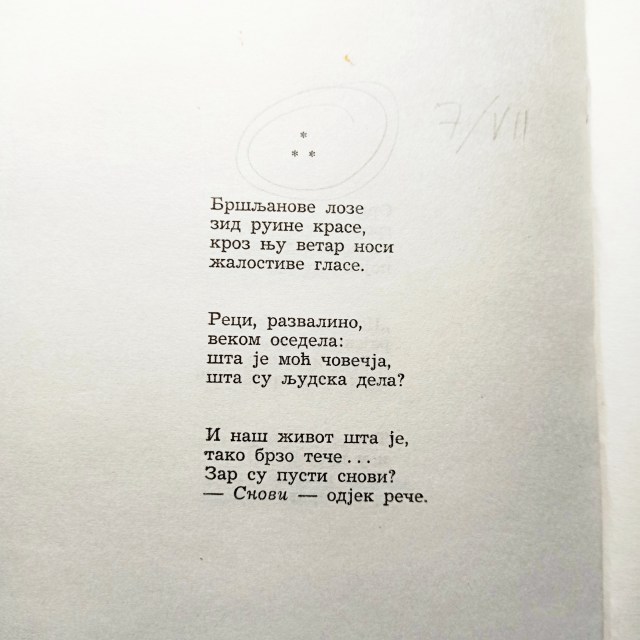
The truth is, artistic fascination with ruins, entropy and fallen kingdoms was always present in European art.
The most early example of this is the ancient Greek myth of the Golden Age.
This myth tells the story of constant decline of the world and human civilization.
It’s the story about once great Golden Race of humanity dying off and being slowly replaced by descendants who grow weaker and less capable in every passing generation.
The Golden Age myth was echoed in Romantic art, which had a strong overall influence on development of modern fantasy.
The composition of a solitary observer, melancholic wanderings and the ruin motif was a hallmark of Europen Romanticism.
There are innumerable works by poets and painters that feature images of ruins and tales of contemplation on the long-gone days of the glorious Rome and Ancient Greece.
The same themes can be followed back to as early as Baroque and even further, late Antiquity.
—
But the same question remains.
Why was this motif of ruins, and the theme of time’s entropy, so inspirational to the classical poets?
And why has it proven to be as popular among the contemporary game designers?
What do we, in fact, talk about when we talk about ruins?
Stories about lone heroes wandering around the monuments of eras gone by aren’t just about broad historical and cultural subjects.
They are also deeply personal, and they touch upon the themes of loneliness, melancholy, self-reflection, memory.
Those storise lead to metaphysical contemplations about the fortune’s whims; —
— they are allegories of the transience of the individual being.
—-
And that is, I think, the main reason why are these entropic settings becoming more and more popular in video games.
That sort of theme makes possible for a more personal connection between a player and game’s setting.
Also, it allows for a so-called „game feel“ to explore other modes and emotions.
Epic, action oriented games can now evoke feelings of melancholy, loneliness and meditative reflection, and not just be about inducing excitement and adrenaline rushes.
The theme of entropy also gives space to more intimate, almost lyrical plots, even in epic action-driven games.
The SOULSBORNE games always follow a hero who, while trying to save the world, also tries to stop themself from giving in to personal entropy and oblivion; —
— and the fate of the doomed world they traverse is sealed not by some abstract war or threat, but by hubris, pride and false ideals of its previous heroes.
—–
In LOOP HERO, the fate of the hero is inseparable from the fate of his destroyed world given to oblivion.
His quest is to literally recreate the forgotten world from his own memory; —
— intertwining, in that way, cultural memory with his personal one.
—–
GOLF CLUB WASTELAND is a meditation on nostalgia, with decaying brutalist monuments of the former Yugoslavia being the symbols of a lost Golden Age and irreparable mistakes of the past.
—-
CHILDREN OF MORTA, in the same vein, isn’t just a story about ANCIENT EVIL WAKING UP.
It’s a deeply personal intergenerational story about family sticking together and trying to mend past mistakes.
—
In conclusion.
As an art form, video games do not exist in a vacuum.
The influence of more classical forms of art on video games may not be as visible, but that doesn’t mean it’s are not there.
More and more are video games embracing devices and themes from the Great works that came before them —
— knowingly or through creative osmosis —
— making video games not just closer to being a part of the vast artistic canon —
— but also making them more diverse, more intimate, more creative, and more human.
Thank you.
 POETICA DEPONIA